
NEWS
April 21, 2026
IN BRIEF
Accountability Lab Nigeria notes the recent directive issued by the National Broadcasting Commission (NBC) over alleged breaches of the Nigeria Broadcasting Code ahead of the 2027 general elections. The Commission’s emphasis on fairness, balance, accuracy, and restrictions on hate speech and presenter bias reflects legitimate concerns about the integrity of Nigeria’s broadcast environment, particularly in the build-up to the 2027 general elections. However, the broader question is not whether regulation is necessary, but how it is designed, communicated, and enforced [...]
SHARE
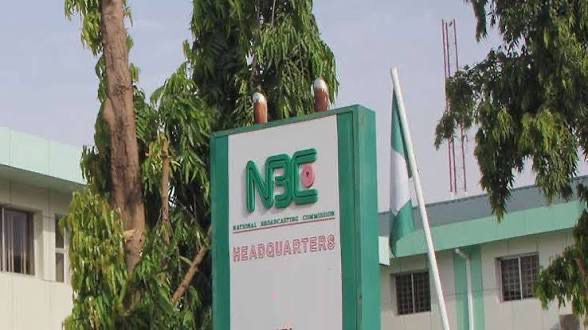
Accountability Lab Nigeria notes the recent directive issued by the National Broadcasting Commission (NBC) over alleged breaches of the Nigeria Broadcasting Code ahead of the 2027 general elections.
The Commission’s emphasis on fairness, balance, accuracy, and restrictions on hate speech and presenter bias reflects legitimate concerns about the integrity of Nigeria’s broadcast environment, particularly in the build-up to the 2027 general elections. However, the broader question is not whether regulation is necessary, but how it is designed, communicated, and enforced in ways that strengthen rather than constrain democratic discourse, press freedom and citizens’ freedom of expression.
Across the African continent, similar regulatory measures during election cycles is a common practice. In Kenya, the Communications Authority of Kenya and media regulators issue binding guidelines to curb hate speech and enforce balanced coverage during elections. In Ghana, the National Media Commission plays an advisory and oversight role, issuing fairness directives while working closely with media houses and journalist associations to uphold ethical standards. In South Africa, the Independent Communications Authority of South Africa enforces structured election broadcasting rules, including equal airtime provisions and clear separation between news and political opinion content.
These examples show that regulatory intervention around elections is not unique to Nigeria. What differs, however, is the institutional approach to implementation. In more established systems, effectiveness is often anchored on three key principles: independence of the regulator, clarity in distinguishing between news and opinion content, and strong engagement with media stakeholders rather than reliance on sanctions alone. A recurring lesson from across Africa is that while rules on neutrality, hate speech, and presenter conduct are widely accepted, the credibility of enforcement depends heavily on consistency and transparency. Where enforcement is perceived as selective or unclear, it risks undermining trust in both regulators and the media ecosystem itself.
In this context, NBC’s renewed focus on compliance presents an opportunity to strengthen Nigeria’s broadcasting environment in line with international best practice. This will require not only enforcement, but also clearer guidance on interpretation of code provisions. While concerns around hate speech, misinformation, and incitement are valid, broad or heavy-handed enforcement risks being perceived as a constraint on press freedom. It is important that any regulatory action is transparent, proportionate, and consistent with constitutional protections for freedom of expression.
In light of the foregoing, we call for:
- Clarity and transparency: The NBC should clearly define what constitutes a breach, ensuring that enforcement processes are open and guided by due process;
- Independence in regulation: Regulatory actions must remain free from political influence, particularly in the lead-up to elections;
- Multi-stakeholder engagement: Media organisations, civil society, and regulators should collaborate to strengthen broadcasting standards without undermining press freedom.
An independent and public-interest driven media plays an important role in holding the government accountable and enables informed citizen participation. As such, efforts to improve broadcasting standards must go hand-in-hand with protecting the civic space necessary for journalists and media platforms to operate without fear. As Nigeria moves toward the 2027 elections, the goal should be to ensure that regulatory frameworks protect the public from harmful content while preserving the essential democratic role of the media to inform, question, and hold the government accountable without fear or undue restriction.