
NEWS
September 30, 2026
IN BRIEF
As a coalition of civil society organizations in Nigeria, we formally demand the immediate withdrawal of the proposed Foreign Aid (Regulation, Transparency and Disclosure) Bill, 2026, currently advancing through the Nigerian Senate. This bill is repressive and unconstitutional. It is an insidious state-sponsored attempt to police empathy, weaponize bureaucracy, and place undue restrictions on the fundamental right of citizens to support and care for one another. At a time when everyday Nigerians are pulling together to survive unprecedented economic hardship [...]
SHARE
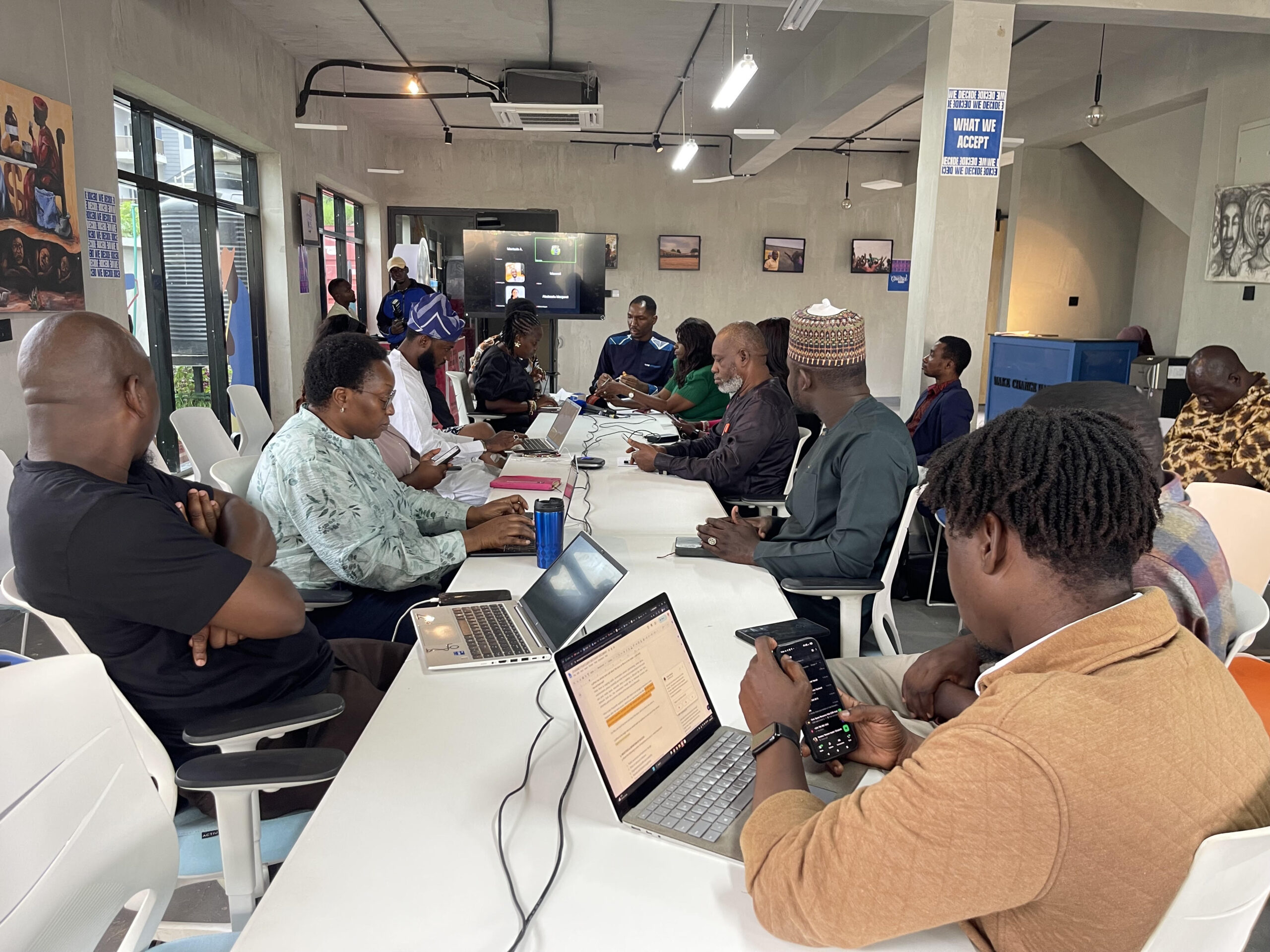
As a coalition of civil society organizations in Nigeria, we formally demand the immediate withdrawal of the proposed Foreign Aid (Regulation, Transparency and Disclosure) Bill, 2026, currently advancing through the Nigerian Senate.
This bill is repressive and unconstitutional. It is an insidious state-sponsored attempt to police empathy, weaponize bureaucracy, and place undue restrictions on the fundamental right of citizens to support and care for one another.
At a time when everyday Nigerians are pulling together to survive unprecedented economic hardship and inflation, the National Assembly is moving aggressively to criminalise local and global solidarity. We state categorically: The government did not provide welfare. It cannot ban our charity.
Originally introduced in 2016 by the late Honourable Umar Buba Jibril, this resurrected legislation has bypassed historical public resistance to advance through its readings. The current bill sponsored by Senator Ibrahim Hassan Dankwambo seeks to regulate and monitor the operation and funding streams of non-governmental organisations (NGOs) and civil society organisations (CSOs). It has passed the first and second reading and has been referred to the Committee on Civil Society and Development Partners for legislative review.
Under the sweeping and broad definitions weaponised within this bill, an “NGO” is not an elite advocacy group based in Abuja. The law explicitly nets any organisation that is not state-owned or a for-profit private business. This means the legislation instantly traps your local church welfare committees, Friday mosque Zakat distribution networks, hometown development unions, university alumni associations, and the informal credit groups (Esusu) run by market women to survive.
Nigeria already maintains extensive institutional oversight over the activities of non-governmental and not-for-profit organisations. The Corporate Affairs Commission (CAC) which handles incorporation, the EFCC’s Special Control Unit against Money Laundering (SCUML), and the Nigeria Financial Intelligence Unit (NFIU) monitor potential illicit financing. The Bill therefore adds no regulatory value to an existing framework of oversight and enforcement.
Nigerian law already places substantial disclosure obligations on not-for-profit organisations. Under Section 77 of the Financial Reporting Council of Nigeria Act, as amended in 2023, organisations that meet the public-interest thresholds must register with the FRC. The FRC’s registration guidelines for not-for-profit organisations require them to identify their principal officers and auditors and to pay annual dues calculated on turnover.
Incorporated trustees must declare their sources of income on the annual return filed with the Corporate Affairs Commission under Section 848 of CAMA 2020, with audited accounts attached. NPOs assessed as at risk of terrorism-financing abuse have further duties under the Terrorism (Prevention and Prohibition) Act 2022 and the 2023 SCUML regulations. They must verify the identities of their donors and file quarterly activity reports.
The obligation to disclose already exists and public transparency about aid exists in practice too. The Federal Ministry of Budget and Economic Planning launched the Nigeria Development Cooperation Dashboard in 2024, and it publishes planned and actual disbursements by donor, sector, state and development plan pillar. The platform has real gaps. It relies largely on donors that publish to the International Aid Transparency Initiative, and a recent OECD/UNDP monitoring exercise found development cooperation flows entirely absent from the national budget.
The government’s response to that finding points to the right remedy. It has committed to recording all development cooperation flows on budget, with quarterly breakdowns, by the 2027 fiscal cycle. Widening the Dashboard’s coverage and linking it to the budget process would advance transparency and accountability without a punitive commission overseeing independent organisations.
The proposed National Foreign Aid Register fills no regulatory vacuum. On the public side, it duplicates the Dashboard, and on the recipient side, it duplicates CAMA, the FRC Act and the SCUML regime. The state already has enforcement powers: the CAC can suspend trustees and appoint interim managers under Section 839 of CAMA, a power civil society has long argued is itself too broad. Section 56 of the Terrorism (Prevention and Prohibition) Act separately allows the CAC’s Registrar-General or SCUML’s Director to refuse or revoke an NPO’s registration.
What the Bill adds is different in kind:
- a regulator whose jurisdiction is triggered by where an organisation’s money comes from;
- a duty to align projects with government-defined priorities;
- criminal penalties for administrative lapses, layered on top of the powers that already exist.
Requiring foreign-funded projects to align with national development plans may be appropriate for ministries, departments and agencies. Applied to independent civil society organisations, it effectively extinguishes their autonomy. Civil society exists partly to challenge official priorities, document abuses, advocate for marginalised groups and serve communities the state does not adequately reach.
The UN Human Rights Council affirmed in Resolutions 24/21 and 32/31 that associations must be free to pursue their lawful objectives without undue interference. In Resolution 22/6, it called on states to ensure that reporting requirements do not inhibit organisations’ access to resources. The Special Rapporteur on the rights to freedom of peaceful assembly and of association treated the ability to seek, receive and use funding, including from foreign sources, as integral to freedom of association in his 2013 report to the Council. The African Commission on Human and Peoples’ Rights has taken the same position in its Guidelines on Freedom of Association and Assembly.
The sanctions regime raises equally serious concerns. Under the Bill, failure to register, an inaccurate disclosure or obstruction of the Commission can attract up to five years’ imprisonment and a minimum fine of ₦5 million for individuals. Organisations face a minimum fine of ₦20 million and the suspension or revocation of their operational licence.
Mandatory minimums leave courts no room to match the penalty to the seriousness of the breach. That alone sits uneasily with the requirement in Article 22(2) of the International Covenant on Civil and Political Rights that any restriction on association be necessary in a democratic society. Administrative delays, filing errors or incomplete documentation should not attract penalties comparable to those for corruption or the diversion of public funds.
Revocation is the gravest of these sanctions. Nigerian organisations hold CAC registration rather than licences, so revoking an “operational licence” would in practice mean deregistration. That can silence an organisation altogether, which is precisely the kind of civic-space restriction that successive UN resolutions on civil society have warned against.
 But the concern with the Bill goes beyond the severity of its sanctions. The problem is also the way its transparency requirements are designed and applied. The central defect in SB. 1034 is not that it demands transparency, but it demands transparency selectively. It creates a new enforcement regime for foreign-funded organisations while leaving domestic political donations, public-office-holder-linked foundations and political spouse-led NGOs outside an equivalent disclosure framework. That asymmetry matters because the largest corruption and election-finance risks in Nigeria do not originate in a ₦5 million grant to a community organisation.
If the National Assembly believes the public has a right to know who puts money into organisations exercising public influence, then that principle must apply regardless of whether the money comes from a foreign donor, a Nigerian corporation, a government agency, a politician or a vehicle associated with a public office holder. Anything less is not a neutral transparency law; it is a selective regulatory burden placed on independent civic actors.
Nigeria does not have to speculate about where this bill can lead. Ethiopia spent a decade restricting foreign-funded civil society before repealing its 2009 regime in 2019 and restoring a route for organisations to receive foreign funding for rights work. Rwanda offers the more immediate warning, which shows its NGO registration and supervision system was used in March 2025 to prohibit registered NGOs, faith-based organisations and foundations from receiving or maintaining cooperation and funding connected to Belgium following the diplomatic rupture between the two governments.
The lesson is not that Nigeria is Ethiopia or Rwanda. It is that once the state creates a broad licensing and enforcement power over organisations because of who funds them, the legal purpose of that power can expand beyond financial transparency. There are no safeguards written into the statute to narrow regulatory powers, judicial appeal, no political-priority test and no discretionary suspension of legitimate civic organisations.
It is against that backdrop that the Bill’s requirement for official approval and alignment with government objectives becomes particularly significant. This bill requires aid to be officially approved and in alignment with the government’s objectives. We wonder what this means for essential work that demands government accountability or investigates high-profile corruption.
As civil society organisations, we call on all Nigerian citizens, every Church leader, Islamic cleric, diaspora network, student union, and market association to reject the NGO bill, emphasizing our shared responsibility to protect civil liberties and solidarity.
We do not need a license to care for our communities. We demand a complete withdrawal of this bill.
Signatories
- Gatefield
- Accountability Lab Nigeria
- Mothers And Marginalised Advocacy Centre (MAMA Centre)
- Webfala Digital Skills for All Initiative
- TechHerNG
- Hope Behind Bars Africa
- DigiCivic Initiative
- YouthHubAfrica
- Ntetee Foundation
- RID Nigeria Initiative (Rivers in the Desert Nigeria)
- Crowdr
- Yiaga Africa
- Tunani Initiative
- BUDGIT Nigeria
- Pan African Lawyers Union (PALU)
- African Law Foundation (AFRILAW)
- Citizens Gavel
- Rule of Law and Accountability Advocacy Centre (RULAAC)
- Speak Out Africa Initiative (SOAI)
- Resource Centre for Human Rights & Civic Education (CHRICED)
- Socio-Economic Rights and Accountability Project (SERAP)
- Socio Economic Research and Development Centre SERDEC
- Nigeria Network of NGOs
- #FixPolitics Initiative
- WACSI Node Nigeria
- Global Rights
- CLEEN Foundation
- Centre for Transparency Advocacy (CTA)
- Koyenum Immalah Foundation (KIF)
- WAVE Foundation Africa
- Enough is Enough (EiE) Nigeria