
NEWS
February 23, 2026
IN BRIEF
Accountability Lab Nigeria welcomes the recent Executive Order signed by President Bola Tinubu aimed at safeguarding and enhancing oil and gas revenues for the Federation, curbing wasteful spending, and eliminating revenue leakages under the current spending framework created by the Petroleum Industry Act, 2021 (PIA). The order reflects a vital corrective impulse toward ensuring that Nigeria captures the full value of its hydrocarbon endowment for national development. However, while the Order’s objective of arresting revenue leakage is widely shared across [...]
SHARE
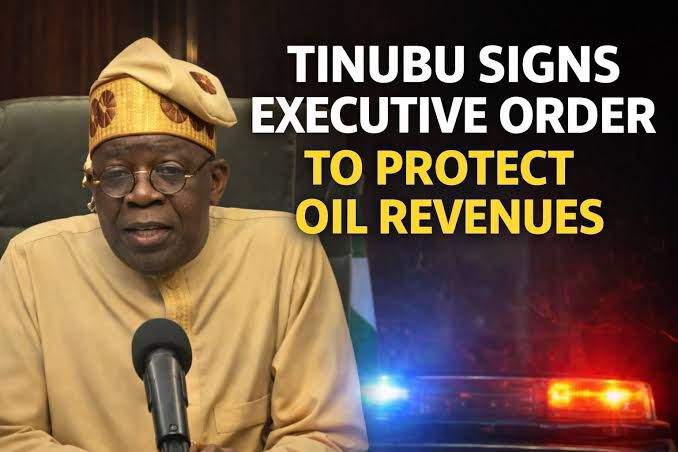
Accountability Lab Nigeria welcomes the recent Executive Order signed by President Bola Tinubu aimed at safeguarding and enhancing oil and gas revenues for the Federation, curbing wasteful spending, and eliminating revenue leakages under the current spending framework created by the Petroleum Industry Act, 2021 (PIA). The order reflects a vital corrective impulse toward ensuring that Nigeria captures the full value of its hydrocarbon endowment for national development.
However, while the Order’s objective of arresting revenue leakage is widely shared across government, industry, and civil society, its implementation raises important questions about the financing mechanisms underpinning Host Community Development Trusts (HCDTs) and Environmental Remediation funds, two cornerstones of sustainable and equitable petroleum governance.
CONTEXT
Under the existing provisions of the PIA, Nigerian National Petroleum Company (NNPC) Limited historically retained:
- A 30% management fee on profit oil and profit gas from Production Sharing Contracts, Profit Sharing Contracts, and Risk Service Contracts;
- A 30% allocation to the Frontier Exploration Fund;
- A 20% profit retention for working capital and future investment.
In aggregate, these deductions, along with other sundry fees and charges built into the PIA framework, have significantly reduced net remittances to the Federation Account, to the extent that more than two-thirds of gross entitlement are diverted before they reach public budgets. The Executive Order seeks to clamp this leakage by requiring all operators to remit royalty oil, tax oil, profit oil, profit gas, and all government entitlements directly to the Federation Account. In principle, ensuring that statutory revenues accrue to the Federation Account is essential for:
- Macro-fiscal stability;
- Transparency of oil and gas rents;
- Predictable budgeting across all three tiers of government.
This policy shift responds to widespread concerns, including declining federal oil revenue inflows and inconsistent fiscal reporting, that have constrained planning for security, health, education, and infrastructure.
UNINTENDED CONSEQUENCES FOR HOST COMMUNITY DEVELOPMENT TRUSTS (HCDTs)
The PIA enshrines HCDTs as a statutory mechanism for channeling 3% of operators’ annual operating expenditure into community-defined development priorities. These trusts were conceived to provide stable, predictable funding for communities impacted by oil and gas operations; community-driven development planning and implementation; and a mechanism for reducing conflict and enhancing local accountability.
While the Executive Order does not abolish HCDTs, its revenue centralization can undermine the structural logic that sustains them:
- Fiscal Substitution Risk: When major revenue streams are folded into the central account without dedicated safeguards for community funds, there is a risk that HCDTs will be viewed as optional or duplicative rather than required. This could weaken both enforcement and operator commitment;
- Political Competition for Funds: Direct remittances to the Federation Account subject all petroleum revenues, including those that effectively fund community obligations, to the annual budgetary cycle. This can diminish the predictability of community inflows;
- Bargaining Power of Communities: The Order strengthens the fiscal position of Abuja policymakers relative to local stakeholders. Unless corrective filters are applied, communities may find themselves competing for shareable funds rather than receiving pre-allocated entitlements.
The net effect could be that HCDTs, while legally intact, become administratively weakened and vulnerable to underfunding.
ENVIRONMENTAL REMEDIATION: FROM EARMARKED FUNDS TO BUDGET DISCRETION
One of the most consequential changes in the Order is the suspension of payments of gas flare penalties into the Midstream and Downstream Gas Infrastructure Fund (MDGIF). Under Section 52 of the PIA, this Fund was intended, in part, to finance infrastructure and environmental mitigation related to gas activities. At the same time, Section 103 of the PIA established an Environmental Remediation Fund under the Nigerian Upstream Petroleum Regulatory Commission (NUPRC) with operator contributions tied to environmental harm.
Redirecting flare penalties into the general Federation Account disrupts the polluter pays principle, undermining the causal link between environmental harm and financing its mitigation. It also makes remediation funding subject to annual budget negotiations, rather than automatic allocation, and weakens public traceability of environmental expenditures. This shift, though fiscally motivated, risks weakening environmental justice frameworks designed to ensure that companies pay for remediation and communities receive compensation for damage incurred.
POLICY PRIORITIES FOR THE PIA REVIEW
The executive order signals a broader review of the PIA. For that review to strengthen rather than weaken petroleum governance, the following priorities are essential:
- Statutory Protection for HCDTs: Reinforce the mandatory nature of HCDT contributions and clarify that central remittances do not substitute or dilute community entitlements. This could include a ring-fencing mechanism or statutory triggers that ensure timely, predictable Trust funding;
- Preserve Environmental Remediation Linkages: Amend PIA provisions to maintain the connection between environmental penalties and remediation financing. This could include:
- A dedicated escrow mechanism for environmental fees within the Federation Account framework;
- Public reporting requirements that map penalties to remediation expenditures.
- Transparent Reporting: Mandate quarterly disclosures of revenues and deductions at every stage, from operator remittances to community and environmental fund allocations, to strengthen public accountability and policy evaluation.
By addressing these, Nigeria can retain the legitimate fiscal discipline goals of the Executive Order while safeguarding social and environmental justice obligations. Accountability Lab Nigeria supports the objective of reducing revenue leakages and clarifying fiscal flows in the petroleum sector. At the same time, equitable development outcomes for host communities and effective environmental remediation require policy safeguards, not accidental circumvention. The forthcoming PIA review is a decisive opportunity to correct course in a way that aligns economic governance with sustainable development.
Accountability Lab Nigeria
Email: nigeria@accountabilitylab.org