
NEWS
November 19, 2025
IN BRIEF
“We want technology that listens before it decides’’.- Daniel, R&R Participant In October 2025, Accountability Lab (AL) Nigeria convened the Rights and Rhythm Concert, where citizens shared reflections about their place in a society increasingly shaped by technology. Their words showed a shared desire for a country where digital spaces amplify freedom of expression, not surveillance; and where technology becomes a useful tool, not another form of inequality. These are not abstract concerns. They go to the core of Nigeria’s [...]
SHARE
“We want technology that listens before it decides’’.- Daniel, R&R Participant
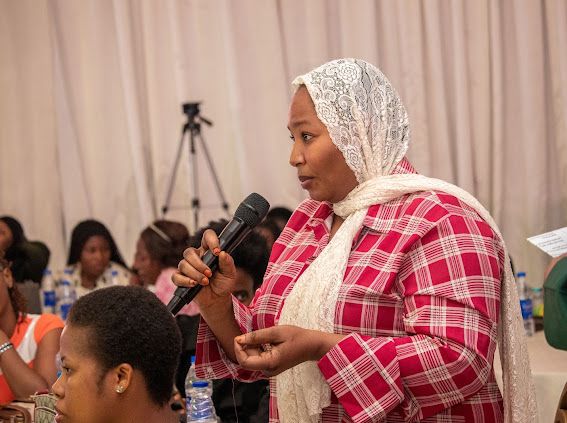
In October 2025, Accountability Lab (AL) Nigeria convened the Rights and Rhythm Concert, where citizens shared reflections about their place in a society increasingly shaped by technology. Their words showed a shared desire for a country where digital spaces amplify freedom of expression, not surveillance; and where technology becomes a useful tool, not another form of inequality. These are not abstract concerns. They go to the core of Nigeria’s proposed National Digital Economy and E-Governance Bill, 2025, which seeks to define how Nigeria governs its digital transformation. With AL Nigeria being a member of the Data and Digital Rights coalition; civil society organisations working on digital rights, data governance, and inclusion, we commend the National Assembly and the Federal Ministry of Communications, Innovation and Digital Economy for taking steps to strengthen the digital landscape. However, like the voices we heard at the concert, we believe this future must be built on transparency, accountability, and human rights.
Technology should never outpace ethics. Yet, the Bill grants sweeping discretionary powers to the Minister and the regulatory agency without adequate checks and balances. Without mechanisms for parliamentary review or inter-agency coordination, the law risks centralising power rather than distributing it. Equally pressing is the Bill’s silence on citizens’ data protection. Nigeria already has the Nigeria Data Protection Act (NDPA), yet this new framework fails to embed enforceable rights or redress mechanisms for citizens whose data may be misused. We risk creating massive data aggregation systems without ensuring consent, oversight, or transparency. In a country where trust in institutions remains fragile, citizens deserve guarantees that their personal information will not become collateral in the race for digital transformation. In August 2025, Nigerian lawyers raised alarm over the “massive National Identification Number (NIN) and Bank Verification Number (BVN) data sales,” saying that over 12,000 youths were reportedly selling other people’s NIN and BVN to some fintech firms. This incident highlights a clear violation of data protection norms, where personal data is being commodified in ways that strip citizens of consent, control, and dignity. It exposes the gaps in accountability within institutions like National Identity Management Commission (NIMC), which currently lack effective enforcement mechanisms to prevent such misuse. Without robust redress systems and stronger regulatory checks, as the Bill should ensure, Nigerians’ sensitive information remains at risk of continual exposure and exploitation.
The sections on Artificial Intelligence (AI) offer another glimpse of missed opportunity. While it is encouraging that AI is acknowledged at all, the Bill remains narrowly technical, focusing on systems rather than people. Nigeria’s future depends not just on how fast we build AI tools, but on how fairly we use them. The National Human Rights Commission (NHRC) has publicly stated that AI, if left unchecked, can “infringe on human rights,” including amplifying inequalities and invading privacy. It also called for human‑rights–centered governance, including independent audits, transparent algorithmic decision-making, and redress mechanisms for harms caused by AI. Human rights and algorithmic impact assessments should be mandatory for any high-risk system deployed in governance. This ensures that technology serves justice and inclusion rather than reinforcing bias or discrimination. Most importantly, the Bill must address the digital divide. Participants at the concert spoke passionately about connectivity, affordability, and access for rural communities and persons with disabilities.
The voices of those who will live with the consequences of digital transformation and the laws governing it must shape its final form. Nigeria’s digital transformation holds immense promise. But progress without protection is perilous. If we truly want a future where every citizen benefits from digital innovation, we must design systems that prioritise human rights and accountability. We therefore join other concerned citizens in calling for urgent action to address the growing risks of data misuse, digital rights violations, and AI-driven harms. Governments, regulators, and technology developers must prioritize multi-stakeholder consultations, transparency, and enforceable safeguards to ensure that personal data, digital spaces, and emerging technologies serve justice, inclusion, and human rights for all.